

#028 — JavaScript Fixed Date After 30 Years: Inside the Temporal API
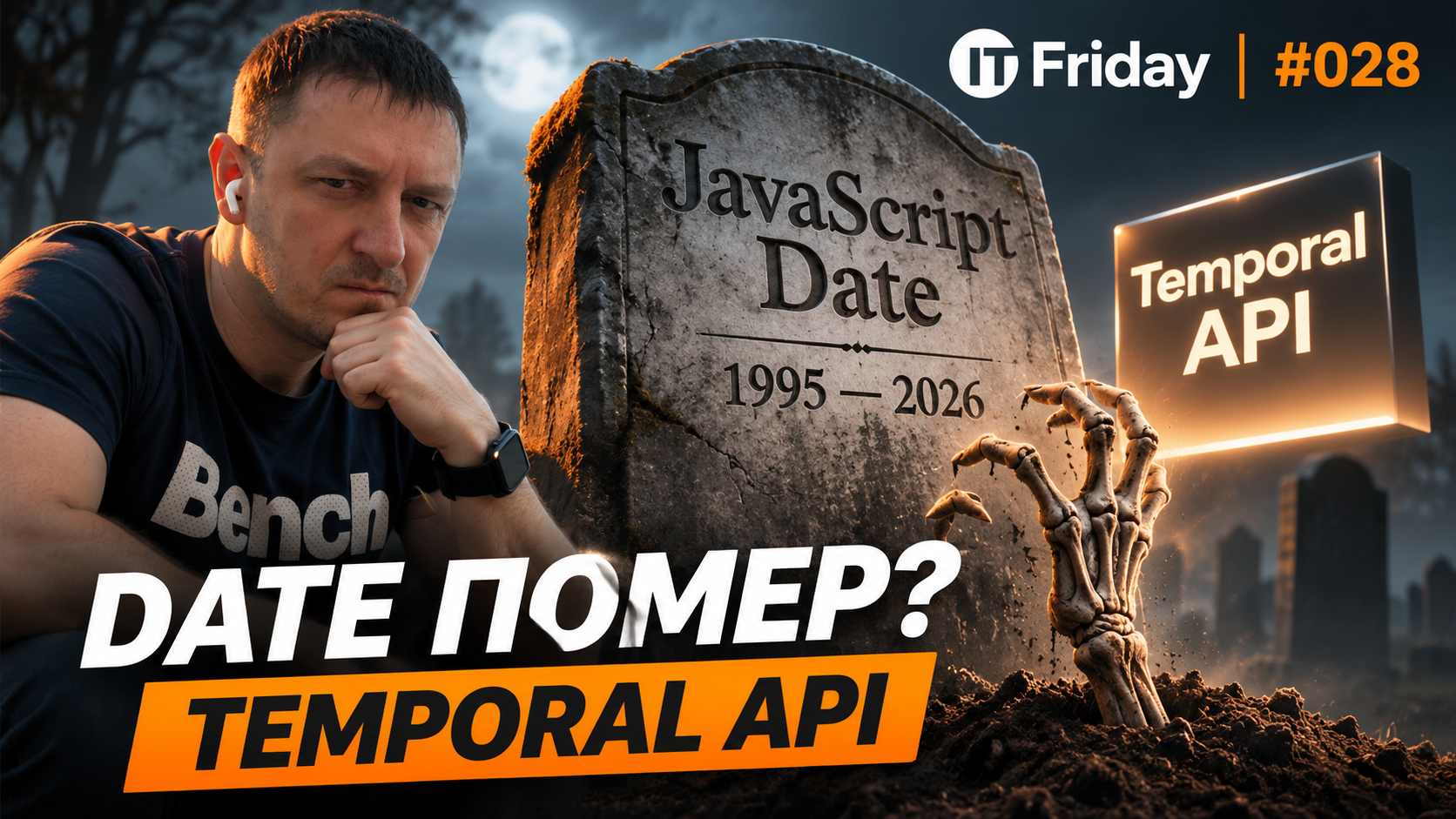
Date: November 20, 2026 | 19:00 London / 21:00 Kyiv
Format: Solo episode · technical deep-dive + live console demo · ~60 minutes
Guest: —
YouTube: https://youtube.com/live/oA8vXBOu8S0
Participants
Oleh Levchenko — Senior Full Stack JavaScript Developer (React / Node.js / AWS)
The AA · Cardiff, UK
YouTube @zloyleva · itfriday.community
What We'll Discuss
JavaScript has lived with Date almost since day one. Zero-based months, mutation, odd parsing, time zones, DST and the classic “why did my date suddenly become yesterday?”. For more than 30 years we patched these problems with libraries. Now JavaScript has the Temporal API, a new model for dates and times that reached Stage 4 in 2026 and already runs natively in modern runtimes.
No reading the docs aloud: we open the console and use live examples to see what exactly was wrong with Date, how Temporal fixes it, and whether it's ready for real projects.
What we'll cover
- Why Date in JavaScript is so strange, and where it came from
- Instant, ZonedDateTime, PlainDate, PlainTime: why so many types
- Why a birthday is not a timestamp
- Time zones without pain: London → Kyiv → New York
- DST: why “tomorrow at 12:00” and “in 24 hours” are not the same thing
- Times that don't exist, and times that happen twice
- What happens when you add a month to 31 January
- Duration, comparison, formatting and serialization
- What to store in the database: UTC, local time or a time zone name
- How to migrate from Date
- Is it time to drop date-fns, Luxon and Day.js
- Where Temporal already works, and where you still need a polyfill
The big question of the evening: did JavaScript finally get proper dates and times, or did we just trade an old complicated API for a new complicated one?
Key Takeaways
To be added after the stream.
Timecodes
To be added after the stream.